Why People Are Skipping Bali in 2026

Villa Ombak Team
Villa Management

The island just had its best year ever. That's the problem.
"I was here 14 years ago and can't remember it being so busy and stressful," said one traveler in April 2024. "I knew Ubud would be busy but not that busy. I've been travelling for one month now in Bali and I think it's almost worse than Canggu."
She's not alone.
The same sentiment echoes across the island—in hostel common rooms, expat dinners, and late-night conversations at beach bars. Bali isn't what it used to be. The magic is still there, but you have to fight through traffic and crowds to find it.
The data confirms what travelers are feeling. European and Australian travel agencies are reporting booking declines for 2025 and 2026. Travelers are asking about "the next Bali"—quieter alternatives like Lombok, Sumba, Sri Lanka. The destination that defined tropical paradise for a generation is watching some of its most loyal visitors look elsewhere.
The Complaint List
Talk to anyone who's returned to Bali after a few years away and you'll hear the same things.
The traffic. What should be a 30-minute drive from Denpasar airport to Canggu now takes 2-3 hours on bad days. The infamous "Canggu shortcut" through rice fields turns into a parking lot every afternoon as thousands of motorbikes weave around gridlocked cars. A DJ from Australia spent six hours in traffic on New Year's Eve 2022 trying to reach a party in the south—and literally didn't arrive until the following year.
The crowds. Mount Batur sunrise hikes feel like theme parks. Temples have become selfie battlegrounds. "Selfie-stick wars, tourists feeding monkeys junk food, and people screaming as monkeys jumped on their backpacks," one visitor described Ubud's Monkey Forest in early 2025.
The construction. New hotels, villas, and resorts are going up constantly, eating into already narrow roads. Every year, Bali loses around 1,000 hectares of farmland to development. The building hasn't stopped—it's accelerated.
The vibe shift. Canggu and Seminyak, once laid-back surf villages, now "feel more like Australian suburbs than Indonesia." The smoothie bowls and beach clubs arrived. So did the premium prices and the Instagram influencers.
Even domestic Indonesian tourists are choosing elsewhere. A tourism professor at Udayana University put it bluntly: the routes in southern Bali are "totally congested," making tourists bored. One Indonesian traveler planning his holiday said Bali "is not on the list due to boredom"—he'd been too many times and the traffic made it exhausting.
The Numbers Behind the Feeling
The sentiment isn't irrational. The math explains it.
Bali hit 7.05 million international arrivals in 2025—a new record, and nearly double the island's resident population of 4.4 million. Add 22.64 million domestic trips and you have an island bursting at capacity.
Indonesia's Tourism Minister warned that another 10% increase would push Bali into "a situation like Barcelona, where tourists became public enemies." That 10% threshold was exceeded by 2024's arrivals alone.
Fodor's Travel put Canggu on its "No List" for 2025, citing overtourism and environmental damage. The water crisis is real: tourism consumes 56-65% of Bali's fresh water, and half of the island's 400 rivers have dried up. Hotels require 800 liters per room per day. Local residents need 200.
The government's response? Stricter tourist screening for 2026. Foreign visitors will face checks on financial stability, planned activities, and length of stay. Governor Wayan Koster is trying to shift from quantity to quality—but the island is already strained.
What "Skipping" Actually Looks Like
The people leaving Bali off their itinerary aren't anti-Indonesia. They're not boycotting anything. They're just landing somewhere else.
Lombok sits 25 minutes east by air, 90 minutes by fast boat. Same timezone as Bali. Same visa system. Same tourist tax. For practical purposes, it's the same trip—just a different runway.
The infrastructure gap that once made Lombok inconvenient has closed. Direct flights now connect:
- Singapore (Scoot, 4x weekly)
- Kuala Lumpur (AirAsia, Batik Air, Super Air Jet—daily service)
- Jakarta (6 carriers, multiple daily)
Lombok International Airport's 3,300-meter runway handles wide-body aircraft. A bypass road completed in 2021 cut airport-to-coast travel time from 30 minutes to 15. The airport currently operates at roughly 35% of its 7-million-passenger annual capacity.
That's not a limitation. That's runway—in both senses.
Who's Making the Move
Surfers chasing uncrowded lineups. Selong Belanak, Gerupuk, Mawi—world-class waves without the crowd factor that defines Bali's famous breaks. Visitors to Lombok's beaches describe "sharing them with a handful of locals," a stark contrast to the packed sand of Kuta or Seminyak.
Digital nomads priced out or fed up with traffic. A mid-range lifestyle in Lombok runs $800-1,200/month versus $1,200-1,800 in Bali. New coworking spaces and cafes are opening in Kuta Lombok. The description that keeps appearing: "Canggu 5-10 years ago but with almost no traffic and wider roads."
Repeat Bali visitors looking for what Bali used to feel like. This is the line that echoes everywhere: "Lombok is what Bali was like 20-30 years ago before tourists discovered it."
"I've watched Bali transform into an incredibly busy destination," said one frequent visitor in September 2025. "The magic is still there, but you have to fight through traffic and crowds to find it. Lombok is the antidote. It's the Bali I remember from my earlier trips—raw, breathtakingly beautiful, and with a pace of life that allows you to actually relax."
Investors who see the trajectory. Land in Kuta Lombok runs Rp 150-250 million per are ($94-156/sqm). The equivalent beachside positioning in Canggu costs Rp 1.9-2.5 billion per are ($1,188-1,563/sqm)—an 87-90% discount. Annual appreciation in Lombok's south coast runs 15-25%. The investors arriving now are the ones who wish they'd bought in Canggu in 2010.
What They're Finding
The Airbnb data captures the contrast. Lombok South has 953 active listings. Bali has 37,567. That's a 39-to-1 ratio.
Yet Lombok's occupancy rate (67%) slightly exceeds Bali's (65%). The demand signal is there. The supply isn't—yet.
Cost of living runs 30-50% lower across the board. A one-bedroom villa rents for $250-500/month in Lombok versus $500-900 in Bali. Local groceries, utilities, transport—all cheaper.
But the real difference isn't the numbers. It's the texture.
Open roads. Empty beaches. The ability to watch a sunset without being hassled every five minutes. A pace that lets you actually feel like you're on vacation rather than navigating an obstacle course.
World-class surf breaks, pristine dive sites, wellness cafes, and digital nomad hubs—without the traffic jams and tourist fatigue.
The Subtext
This shift isn't purely organic. The Indonesian government is engineering it.
Lombok's Mandalika region is one of five "Super Priority Destinations" receiving concentrated national investment. The Asian Infrastructure Investment Bank committed $248.4 million for roads, water, and utilities. Total investment committed to the special economic zone: Rp 17 trillion ($1.06 billion).
The developers building Mandalika are the same ones who built Nusa Dua—Bali's original luxury tourism zone in the 1970s. They're running the same playbook: government-backed infrastructure, international hotel brands (Pullman and Novotel operational, Club Med and Marriott's Aloft signed), and tax incentives up to 20 years for qualifying investments.
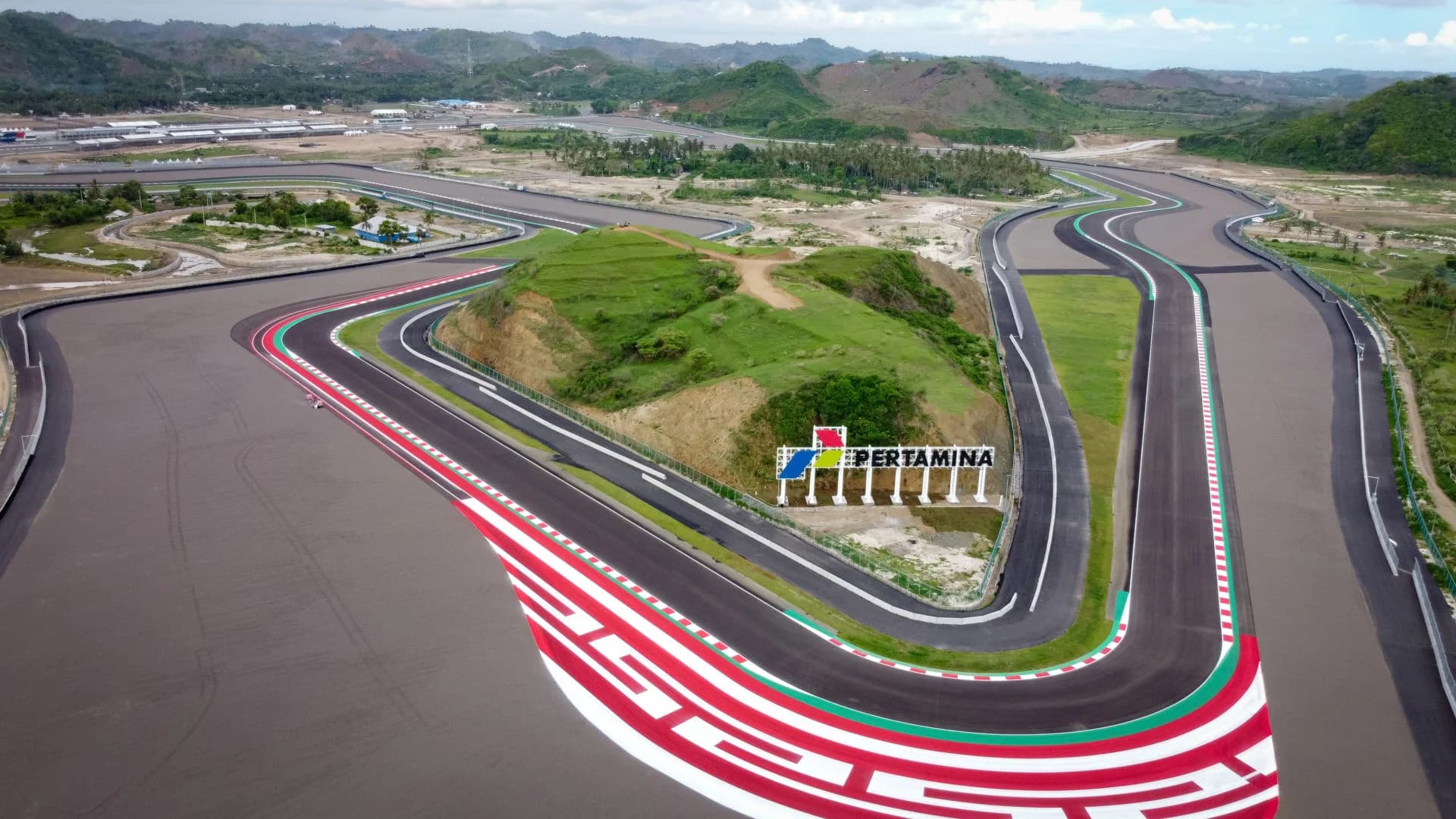
MotoGP provides the proof of concept. The 2025 race drew 140,324 spectators—up 15.7% from the year before. Hotels in the Mandalika zone hit 100% occupancy. The event pumped Rp 4.8 trillion ($289 million) into the local economy and broadcast to 300+ million viewers globally. The contract runs through 2031.
Lombok isn't being positioned as an escape from Bali. It's being built as the overflow valve—the place that absorbs demand Bali can no longer handle.
The Bottom Line
People aren't skipping Bali because it failed. They're skipping it because it succeeded so completely that it created demand for an alternative.
For years, that alternative didn't exist—or at least, it wasn't accessible enough to matter. Getting to Lombok meant connecting through Bali or Jakarta. The roads were rough. The infrastructure wasn't ready.
That's changed. Direct flights land from Singapore and Kuala Lumpur. The airport has capacity. The roads work. The government is pouring billions into making it a real destination, not just a Bali overflow.
The question for travelers has shifted. It's no longer "Bali or somewhere else entirely." It's "Bali or 25 minutes east."
For surfers, nomads, and longtime Bali lovers who remember what the island felt like before—the answer is increasingly the latter.
Villa Ombak Team
Villa Management
The dedicated team at Villa Ombak, sharing local insights and villa updates to help you make the most of your Lombok experience.